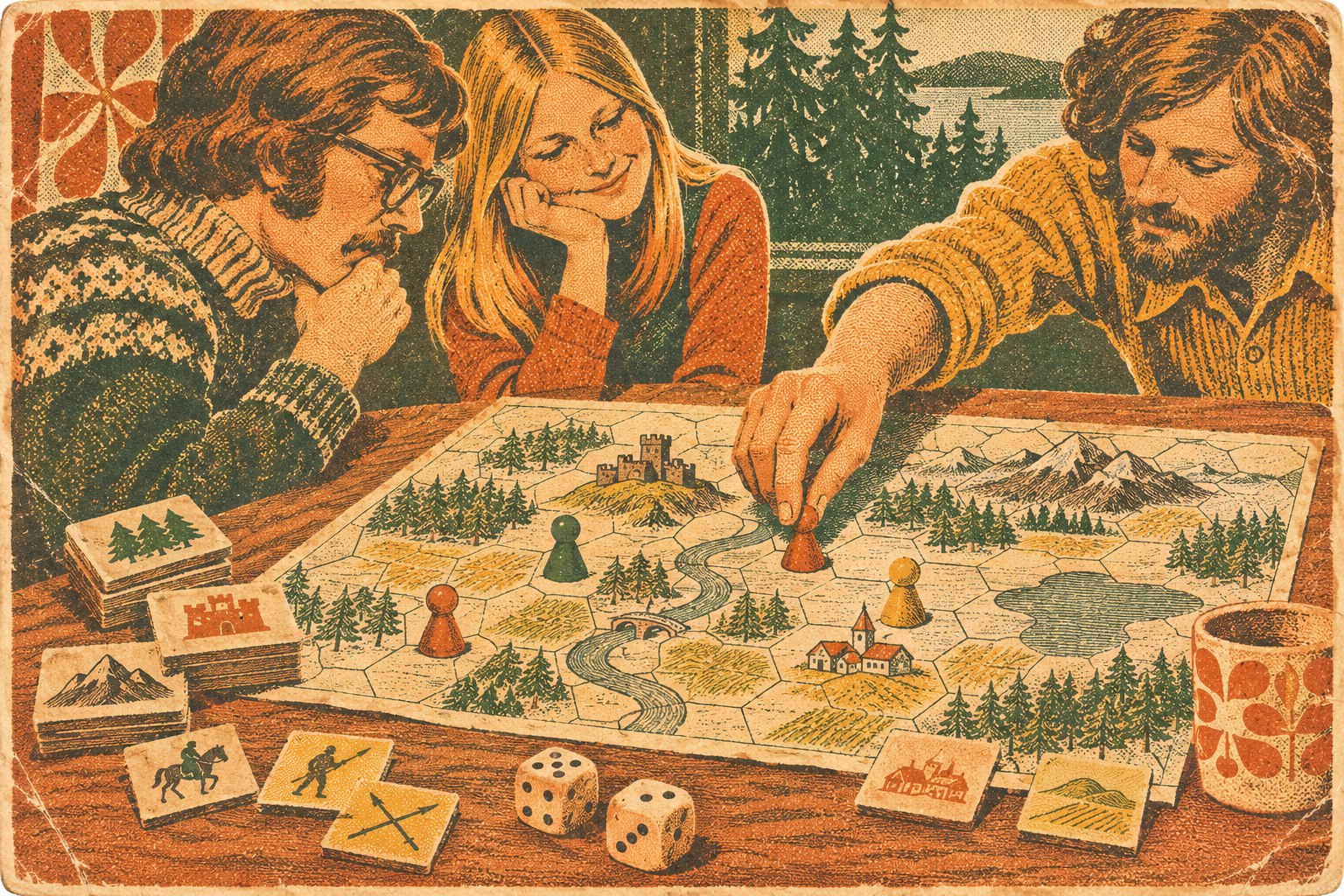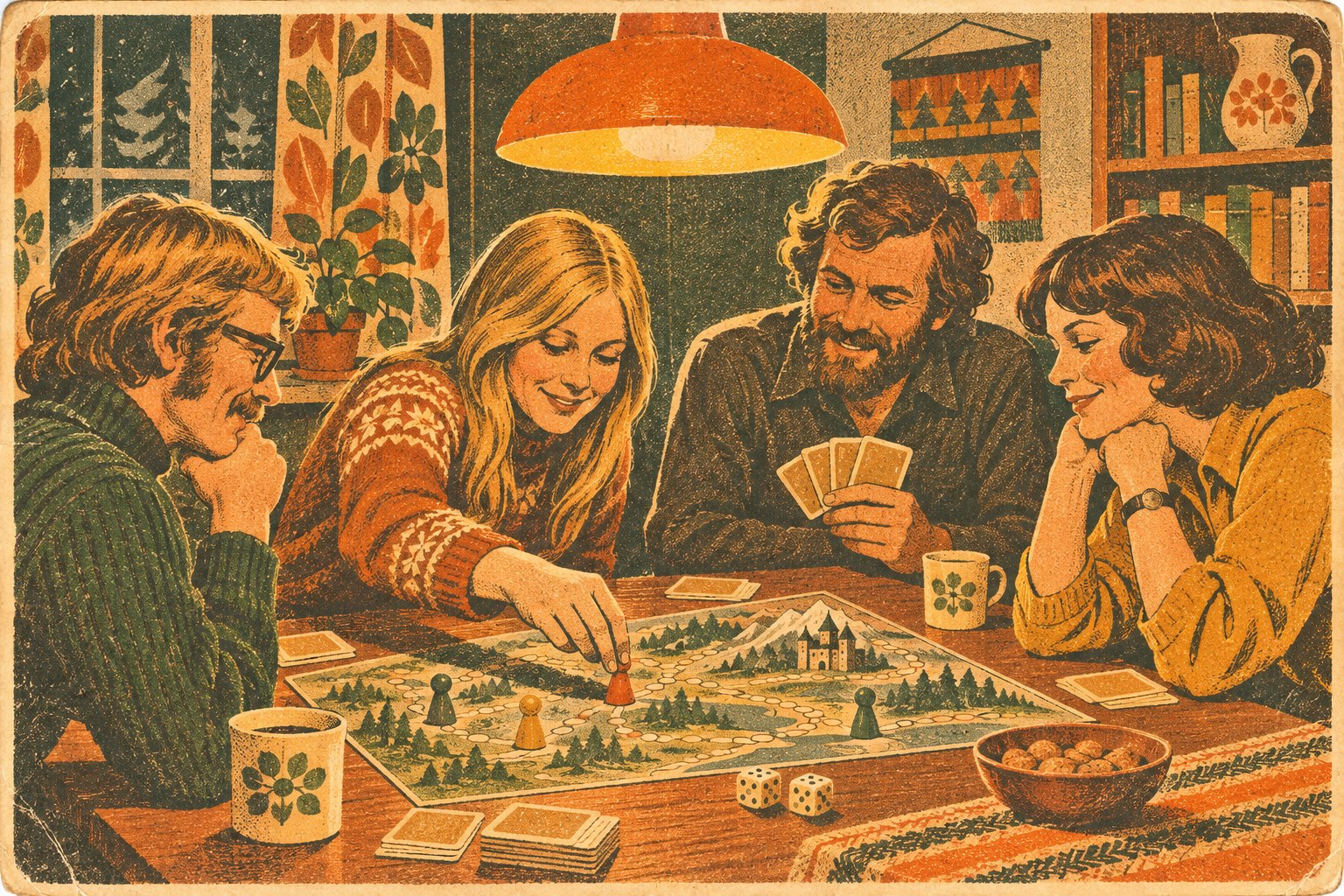
A good game night often starts before the first die is rolled. Ask who is coming, how much time they have and what they want from the evening. One person may want to learn something new; another may want a little conversation between turns.
Choose with the group
Describe the proposed game in ordinary language: roughly how long it takes, how much there is to learn, and whether you will cooperate or compete. Leave room for someone to suggest that another kind of game would fit the evening better.
Have a shorter alternative ready. It helps when somebody arrives late or the larger plan requires more energy than the group has available.
Teach through a first move
Start with the objective, then demonstrate a simple turn. Explain what a player can choose and what happens after that choice. Details needed only later can wait until they become relevant.
When everyone is new to a game, the first round can be a practice round. Say so clearly, so nobody has to wonder whether an early mistake has already decided the evening.
Leave everyone a decision
In a cooperative game, solving each other's turns can be tempting. Try asking a question instead: what would you like to achieve? Share what you notice, but let the player whose turn it is make the decision.
In a competitive game, the same consideration might mean reminding someone of a clear rule everyone already knows. Agree as a group on how to handle forgotten details.
Plan the pause too
Keep drinks away from maps and cards. Put out a small bowl for loose counters. Pick a natural point for a break, especially during a longer game. These practical details leave more attention available for playing.
Finish with a little curiosity
Ask what each person would like to try next time. The answer need not be a new game. It might be the same scenario with swapped roles, a different approach, or simply an evening that starts a little earlier.