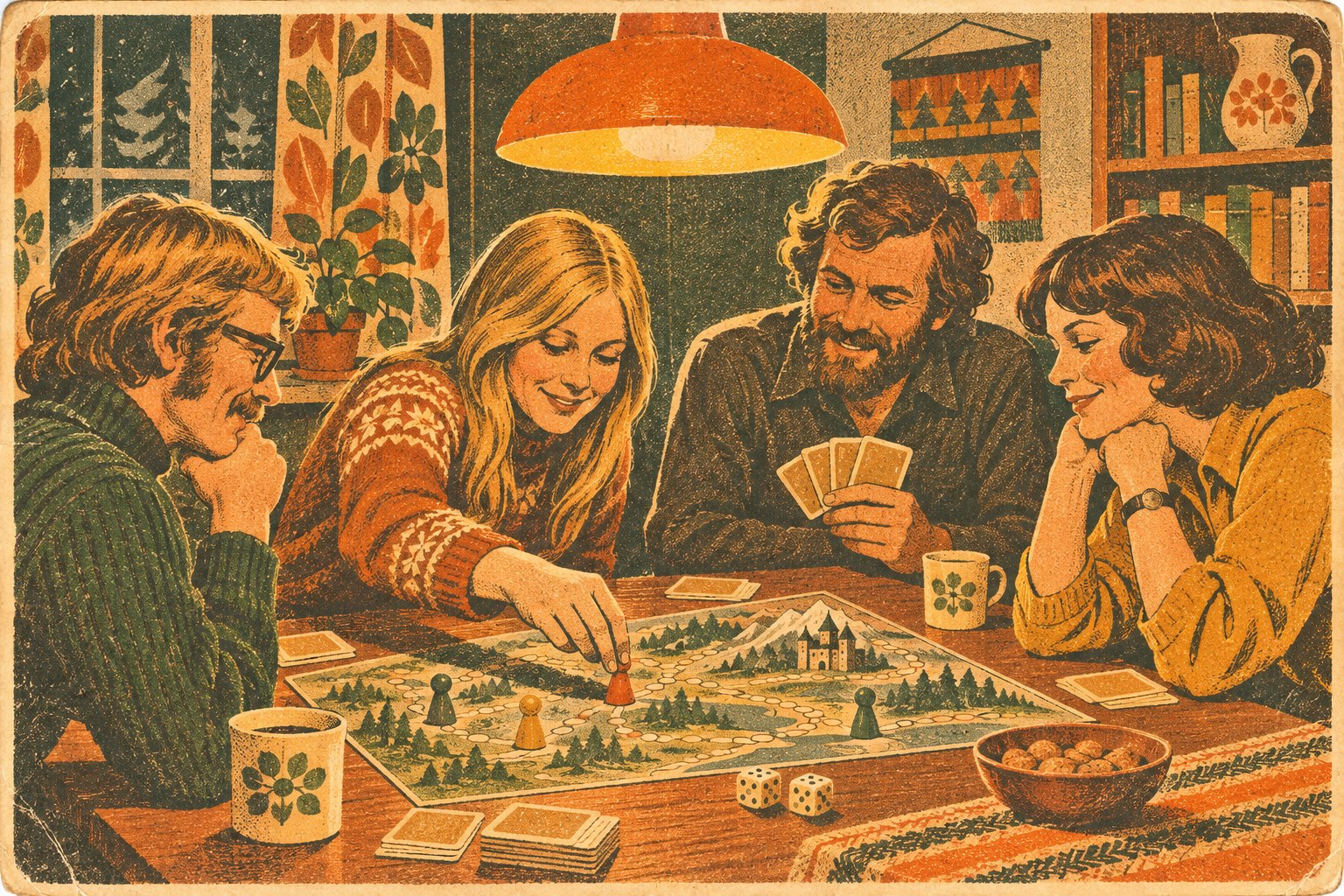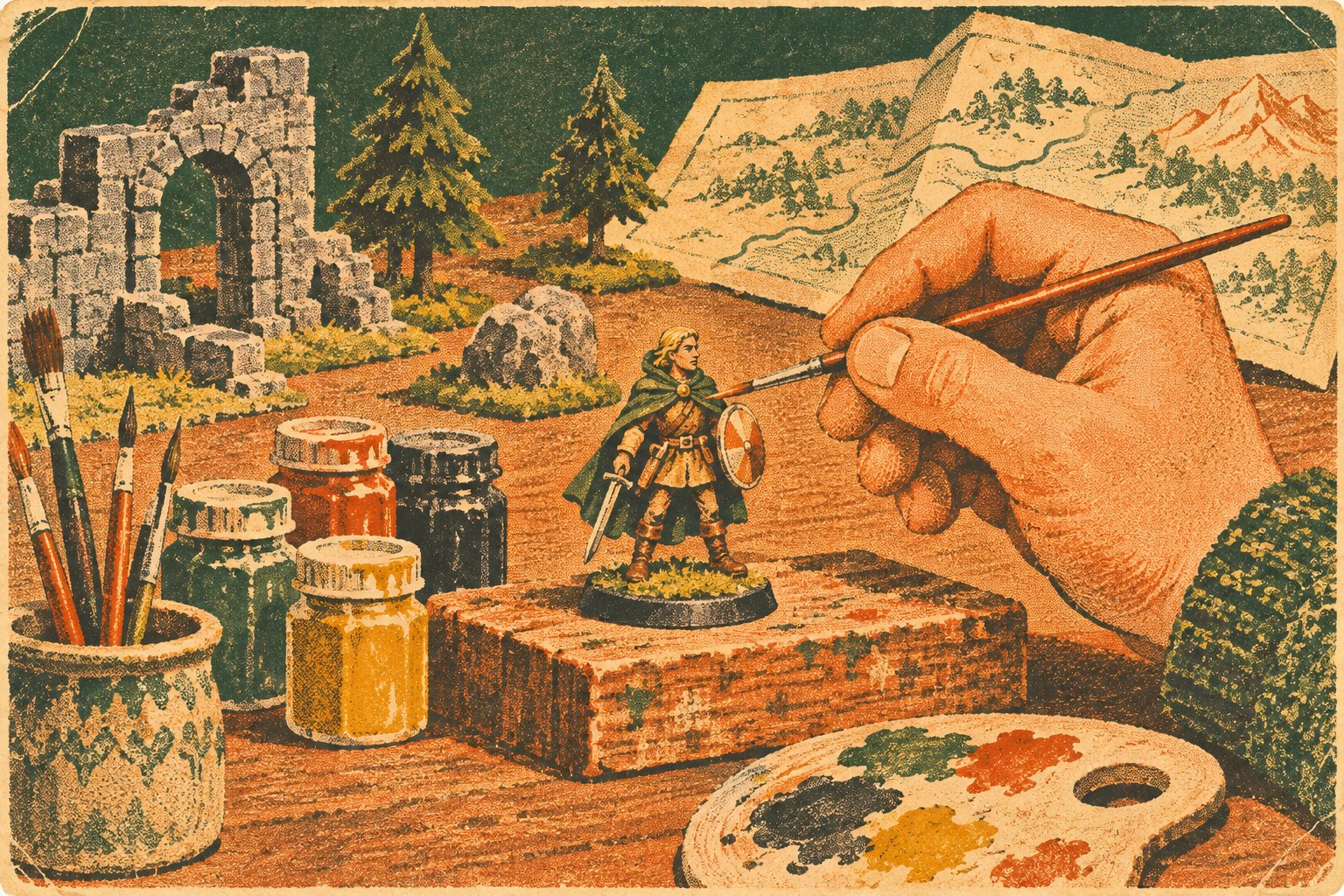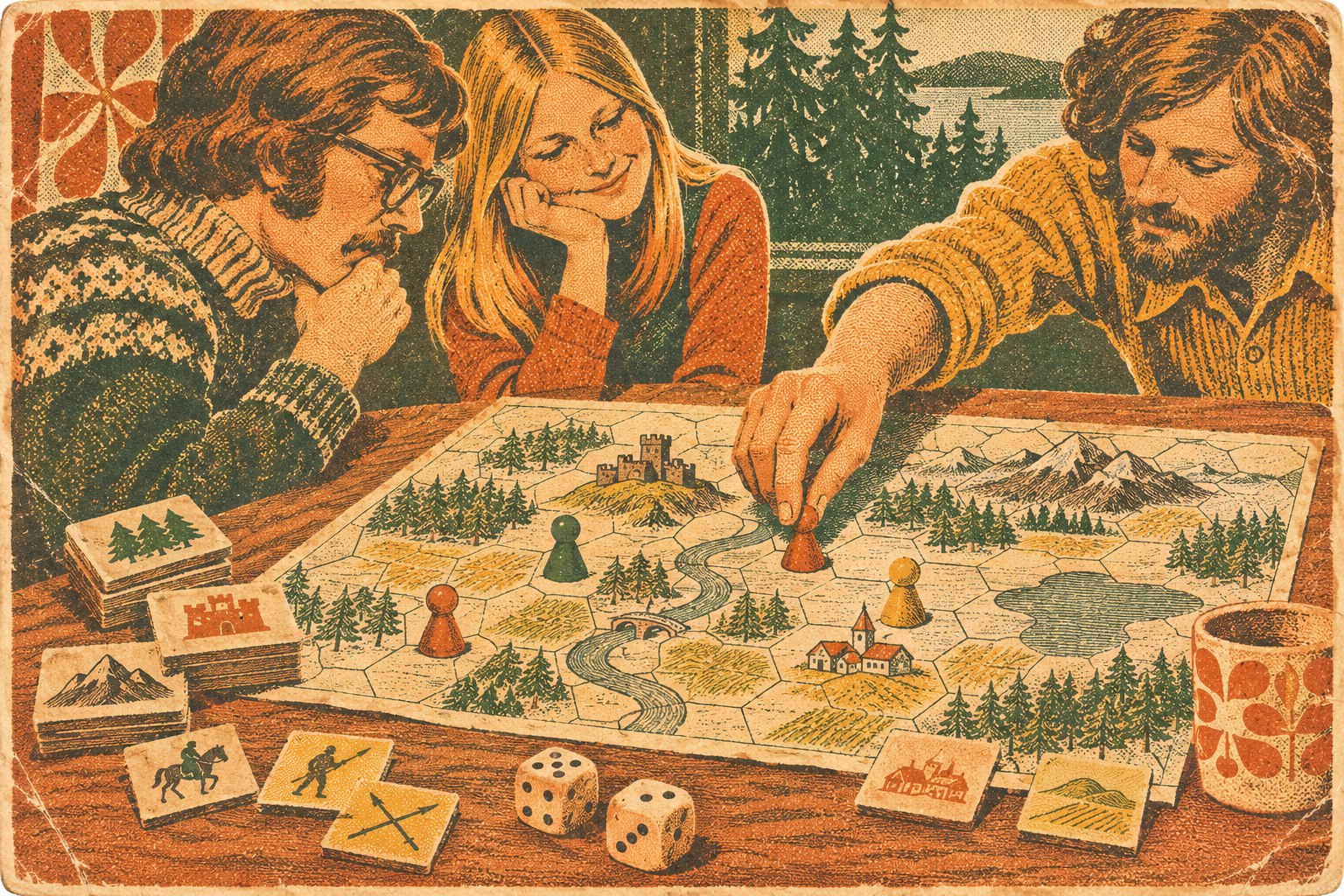
Your first scenario does not need to be an entire campaign. A small table, a handful of pieces and an objective everyone understands can be enough. Start with the situation you want to explore, rather than every miniature in the box.
Give the table a question
A bridge must be held. A messenger needs to cross the map. Two small groups are looking for the same missing supplies. A clear question gives each move a purpose and helps everyone recognise the end of the game.
Choose an objective you can explain in a sentence. If winning takes a separate document to understand, simplify it for the first session.
Leave room between the details
Build the landscape from a few clear elements: an open area, something that blocks sight and a route between them. A book can stand in for a hill, and a piece of card can mark a wood. Agree on what the terrain means before starting.
The map should offer choices. Two reasonably useful approaches to an objective give players more to consider than a single narrow corridor.
Keep the first setup small
Use only as many units as you can comfortably remember. The pieces and counters you already own are a good place to start. A miniature with three special rules can wait until the next evening.
Write the starting positions, objective and any scenario-specific rules on one card. Let the game's ordinary rules do the remaining work.
Agree on the ending first
Choose an end time or a small number of rounds suited to your particular game. That leaves room to finish, talk about the result and perhaps replay the same map from the other side.
A good first scenario leaves time for a second attempt.
Keep what worked
Afterwards, make three short notes: which decision was most interesting, what became unclear, and what would you change? Adjust one thing at a time. The next version need not be bigger. It might simply offer a better decision at the bridge.